Peptide Screening: Hplc & Mass Specification Pureness Overview Peak The target peptide appears as an unique height, and its location relative to the overall peak area shows the pureness portion. A well-synthesized research peptide commonly attains pureness levels of 98% or higher. Infected peptides show several optimals on HPLC chromatograms, molecular weight disparities in mass spectrometry, or visible bits in remedy. Independent lab testing detects contamination before products get to researchers. Mass spectrometry gives conclusive confirmation of peptide identity by gauging the specific molecular weight of the compound, frequently to within 0.01% of the theoretical value. At Verified Peptides, every peptide set undertakes extensive HPLC evaluation as part of our quality assurance. We make use of independent third-party laboratories for analytical screening of each batch to acquire impartial HPLC and MS information verifying the peptide's identity, purity, and composition [3] The HPLC chromatogram have to show a clean account conference our rigorous pureness standards Click for more info (≥ 95% pureness, with most batches in fact exceeding 98%) [4] Any batch that drops listed below our pureness requirements or display screens unanticipated pollutant heights is re-purified or thrown out. HPLC approach development is needed at each phase of medicine R&D, beginning with the very early exploration stage. Throughout this stage, the HPLC approach can be established using a generic procedure as the medicine is being evaluated at a higher focus and just semi-quantitative worths are required. Naturally, this fit-for-purpose strategy helps decrease the HPLC examination cost significantly during early discovery research studies. When you pick Emirates Peptides, you select self-confidence in your study products. HPLC divides the elements of a peptide sample based upon their chemical residential properties as they go through a specialized column under high stress. A detector determines each element as it leaves the column, generating a chromatogram-- a visual representation of the example's make-up.
- The purity of the peptide is validated by running analytical HPLC complied with by mass spectrum evaluation.Naturally, this fit-for-purpose method aids reduce the HPLC test cost significantly throughout early exploration researches.An effective pureness operations balances rate, cost, and the degree of logical certainty required.
Do All Peptide Distributors Supply Coa?
Mass Spectrometry (MS) is everything about determining the exact molecular weight of a compound. Reach out today and learn exactly how we can help you bring risk-free, reliable peptide treatments to market. The peptide bond in the peptide is the amide bond, which generally has strong absorption at 220 nm (comparable to healthy protein), so we typically select 220 nm as the detection wavelength of the peptide. If your peptide has a benzene ring structure such as Trp, Tyr and dye particles adjustments, we can also make use of 275 nm as the detection wavelength for discovery as a reference. We are thrilled to finish our bioanalytical studies with Pharmaceutical Manufacturing their top quality and exceptionally receptive team.Use Peptide Mapping For Architectural Confirmation
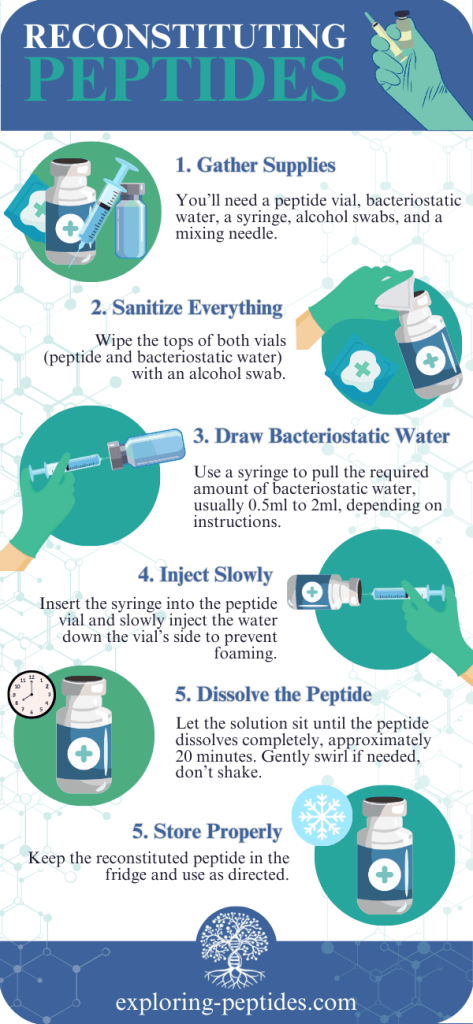
If a peptide is re-tested after storage stress and anxiety, HPLC can expose whether new contamination optimals have actually appeared or whether the primary top area has decreased. This attaches straight with handling subjects such as peptide storage space and peptide reconstitution. Impurities in peptide samples can originate from insufficient synthesis, side responses, or deterioration during handling and storage. These impurities-- which might consist of trimmed sequences, deletion peptides, or oxidation items-- can hinder experimental lead to unforeseeable means. A peptide sample detailed at 95% purity consists of 5% unidentified compounds that could activate incorrect favorable outcomes, mask true biological effects, or present undesirable variables into thoroughly created experiments. High-performance fluid chromatography (HPLC) testing is a logical chemistry procedure to divide, discover, and measure drugs and their metabolites within different formulas, automobiles, and organic matrices. HPLC validation of purity is crucial for peptide recognition and reputable speculative end results. For peptide purity testing, reverse-phase HPLC is the basic theoretical model. The chromatographic pureness is then computed by contrasting the area under the primary peak with the complete location under all incorporated peaks. Dose verification research study for formula examples is a considerable component of any kind of compelling GLP research study and is obligatory by the United States Food and Drug Administration (USFDA) for formulations dosed in toxicology researches. We offer top quality, preclinical dosage formulation analysis for GLP and non-GLP researches to guarantee your research begins on the right course. NorthEast Biolab (NEBA) has considerable experience in all elements of dosage solution evaluation.How much does peptide HPLC testing cost?
The cost of peptide evaluation service differs substantially based on which methods your governing package needs: HPLC-UV Evaluation: $& #x 24; 300 & #x 2013; & #x 24; 800 per sample (basic purity evaluation) LC-MS (Liquid Chromatography-Mass Spectrometry): $& #x 24; 600 & #x 2013; & #x 24; 1,500 per sample (molecular weight verification).